Why is my commercial drink cooler running but not cooling?
A dirty condenser coil or a condenser fan that has stopped spinning are the most common causes of a glass door drink cooler that runs but does not cool.
Both problems keep heat inside the system. The compressor continues to run, but the cooler is unable to remove the heat, causing the drinks to gradually warm up.
Other common causes include a worn door gasket, an iced-up evaporator coil, a malfunctioning thermostat, or a refrigerant leak.
A recent repair at a Hillsborough restaurant
The owner of a small family burger and fries spot in Hillsborough Township called us about the drink cooler by the front door.
It is a Fogel single door glass merchandiser, the kind you see in delis, pizza shops and diners, stocked with sports drinks and iced tea.
The cooler was still humming. The lights were turned on, and the fan inside was blowing. However, customers continued to report that their drinks felt cool rather than cold.
The owner placed a thermometer on the middle shelf, and it read much higher than where a drink cooler should be.
A warm drink cooler does not close a restaurant, but it reduces sales every day. Nobody wants warm iced tea with their hamburger.
What we checked
- We took readings from the top, middle, and bottom shelves. The entire cabinet was warm, not just the area nearest the door.
- We checked the door gasket all the way around. It was sealing well, so warm air was not leaking in.
- We looked at the evaporator coil inside the cabinet. It had no heavy ice, which ruled out a defrost problem.
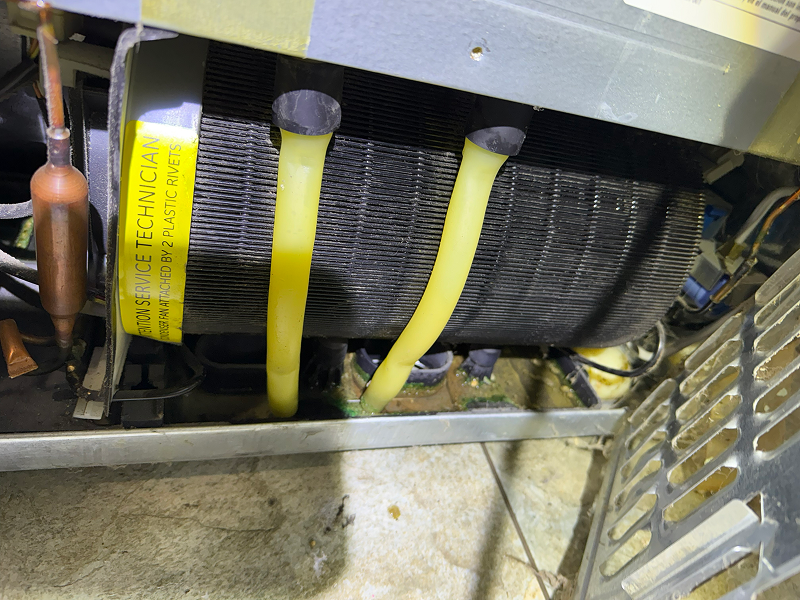
- We pulled the grille at the bottom of the unit, where the compressor and condenser sit on this model. The condenser coil was covered in a thick mat of dust and grease, and the condenser fan was not turning.
What we fixed
- Cleaned the condenser coil: we brushed and vacuumed the coil, then used coil cleaner to break up the grease.
- Replaced the condenser fan motor: the old motor had seized bearings and would not spin, even by hand.
- Checked the system: we tested the compressor and the refrigerant pressures to make sure the overheating hadn’t damaged anything else.
- Confirmed the temperature: we stayed while the cooler pulled down and started cycling off normally.
The cooler was back to cold drinks on the same visit, and nothing else needed to be replaced. We also showed the owner where the condenser grille is and how to keep it clear.
This scenario is a very common story in restaurants. Fryers and grills put grease into the air. A cooler near the front door also pulls in dust every time the door opens. That mix sticks to the condenser coil fast. Once the coil is clogged, the fan works harder and runs hotter until it fails.
Why a dirty condenser coil stops a cooler from cooling
A refrigerator does not make cold. It moves heat. The refrigerant picks up heat inside the cabinet and carries it to the condenser coil at the bottom or top of the unit. The condenser fan blows air across that coil to get rid of the heat.
When the coil is covered in dust, the heat cannot get out. When the fan stops, there is no air moving at all. Either way, the refrigerant comes back still warm, and the cooler cannot keep up. The compressor runs nonstop, uses more power, and wears out faster.
That is why a cheap fix like a coil cleaning protects the most expensive part of the cooler, the compressor.
Signs your drink cooler needs service
- Drinks feel cool but not cold, even after sitting overnight
- The cooler runs all the time and almost never cycles off
- Hot air or loud noise comes from the bottom grille
- Frost or ice builds up on the back wall inside
- Water collects on the floor under the unit
- The compressor clicks on and off every few minutes
If you see any of these, it is better to call early. A cooler that runs hot for weeks can damage the compressor, and that turns a small repair into a big one.
What you can check before you call
- Use a thermometer: put it in a glass of water on the middle shelf and check it after a few hours.
- Clear the grille: make sure boxes, mops or trash bags are not blocking the vent at the bottom.
- Test the door seal: close the door on a dollar bill. If it slides out easily, the gasket may need to be replaced.
- Do not block the fan: keep drinks a few inches away from the fan and the back wall inside.
- Check the spot: a cooler next to a fryer, oven or sunny window has to work much harder.
If you are comfortable doing it, you can unplug the cooler and gently brush dust off the condenser coil. Do not bend the thin metal fins, and do not spray water on the electrical parts.
When to call a technician
Call a technician if the cooler is still warm after you clean the coil, if the condenser fan does not spin when the compressor is running, or if the evaporator inside is covered in ice. An oily spot near the tubing can point to a refrigerant leak. You can learn more about that in our guide to refrigerant leak signs.
A cooler that never stops running is another warning sign. Our article on a refrigerator running constantly covers the most common causes.
How to keep a commercial cooler running well
- Clean the condenser coil every 3 months, or every month in a busy kitchen
- Wipe down and check the door gasket once a month
- Keep the space around the vents clear
- Do not overload the shelves so air can move
- Have a technician service the unit at least once a year
These small habits keep drinks cold, lower your power bill, and help the cooler last for years.
Commercial refrigeration repair in Hillsborough
ProFix repairs glass door coolers, reach-in refrigerators, prep tables and walk-in refrigerators for restaurants, delis, cafes and convenience stores across Hillsborough Township, Bridgewater, Somerville, Raritan and Branchburg. See our commercial appliance repair page for everything we service.
Frequently asked questions
How cold should a commercial drink cooler be?
Most drink coolers are set between 33 and 38°F. If you also keep food in the cooler, it needs to stay at 41°F or below to meet food safety rules.
How often should I clean the condenser coil on my cooler?
Clean it every 3 months. In a kitchen with fryers or grills, or a cooler near the front door, clean it every month because grease and dust build up much faster.
Why is my commercial cooler running all the time?
The most common reasons are a dirty condenser coil, a failed condenser fan, a door that does not seal, or a cooler packed so full that air cannot move. A low refrigerant charge can also make it run nonstop.
Is it worth repairing an older glass door cooler?
Usually yes. Fan motors, thermostats, door gaskets and coil cleanings are small repairs that bring a cooler back to normal. If the compressor fails on a very old unit, we will tell you honestly whether repair or replacement makes more sense.
Can I clean the condenser coil myself?
Yes. Unplug the cooler first, remove the grille, and use a soft brush and a vacuum. Be gentle with the fins and keep water away from the electrical parts. If the coil is coated in grease, a technician can deep clean it.
Do you repair commercial refrigerators in Hillsborough, NJ?
Yes. We repair glass door coolers, reach-in refrigerators, prep tables and walk-in coolers for businesses across Hillsborough Township and the rest of Somerset County.
Featured Articles
Freezer Not Freezing? A Viking Repair in Bridgewater, NJ
Learn More
Refrigerant Leak in Your Refrigerator: Signs, Causes, and What to Do
Learn More
How Often Should You Clean Refrigerator Coils? (And What Happens If You Don't)
Learn More