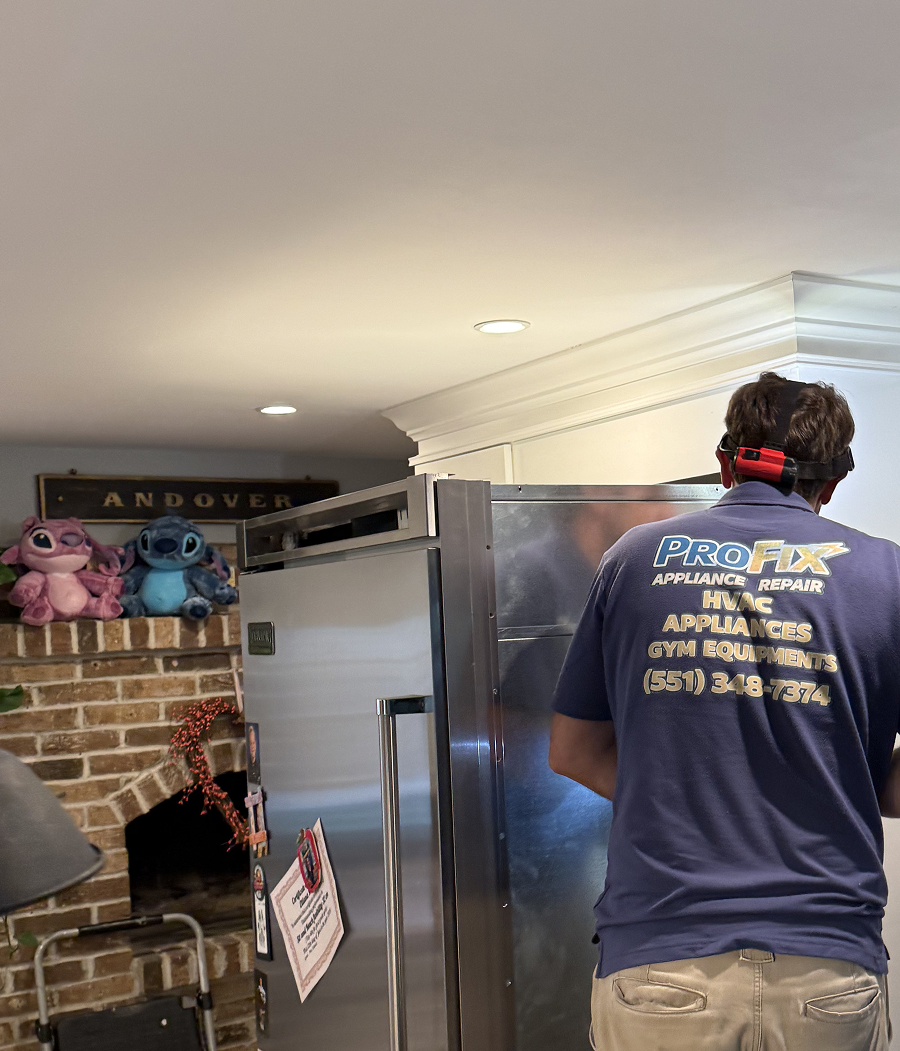
Is your refrigerator running but not keeping anything cold? Even after you've cleaned the coils and checked the door seal, the milk and ice cream remain warm and soft. One possibility that is frequently overlooked is a refrigerant leak.
Refrigerant is the substance that makes your fridge cold. It circulates through the system in a closed loop, absorbing heat from inside and releasing it outside. When that loop develops a leak, the whole cooling process breaks down — slowly, quietly, and in a way that's easy to mistake for something else.
Here's what to look for and what to do about it.
5 Signs Your Refrigerator May Have a Refrigerant Leak
1. Your Fridge Isn't Cooling Properly — Even Though It's Running
This is typically the first thing people notice. The compressor is humming, and the refrigerator sounds normal, but the food is not staying cold. If your refrigerator's temperature is consistently above 40°F (check with an inexpensive appliance thermometer), you should investigate the problem.
2. The Compressor Runs Constantly
When refrigerant levels drop, the compressor works overtime to compensate. Instead of cycling on and off as usual, it operates almost continuously. This increases electricity consumption and puts additional strain on the compressor, shortening the appliance's life.
3. You Notice an Unusual Smell
Although refrigerant is mostly odorless, some people report a faint chemical or slightly sweet odor when there is a significant leak. Don't ignore anything that doesn't smell like food, especially if the odor is strongest near the back or bottom of the refrigerator.
4. There's an Oily or Slick Residue Around the Fridge
Leaked refrigerant can leave a thin, slippery film on the floor or on the back of the unit's components. It's frequently mistaken for a water leak, but it feels different—more oily than watery.
5. Excessive Frost or Ice Buildup on the Evaporator Coils
It is normal to have some frost on the evaporator coils. However, a thick layer of ice, especially if it is uneven or accumulates quickly, can indicate that refrigerant is not properly circulating through the system.
Can Leaking Freon Make You Sick?
This is one of the most common questions we receive, and the honest answer is, "It depends on the amount of exposure."
A small, slow leak in a well-ventilated kitchen is unlikely to endanger most adults. However, prolonged exposure, particularly in a small, enclosed space, can result in symptoms such as dizziness, headaches, and difficulty breathing. Children, the elderly, and pets are especially sensitive.
If you smell something strong and chemical, or if several people in the house are experiencing unexplained symptoms, immediately ventilate the area and contact a technician.
Modern refrigerators use refrigerants like R-134a or R-600a (isobutane), which are much safer than the older R-22 (commonly called Freon). If your refrigerator is from before 2010, it likely uses R-22 — which is no longer manufactured and more expensive to service.
Can You Eat Food From a Fridge With a Refrigerant Leak?
The refrigerant does not contaminate food because it circulates in a sealed system and does not come into direct contact with what is inside. So the bigger concern is spoilage, not poisoning.
Bacteria multiply rapidly if your refrigerator does not maintain a temperature of 40°F or lower. Milk, meat, and leftovers are all at risk within hours. Use a thermometer, and if in doubt, throw it away.
Is It Worth Fixing a Refrigerant Leak?
That depends on several factors, including the age of the refrigerator, the type of refrigerant used, and the severity of the leak.
Repairing a newer refrigerator (less than ten years old) with a minor leak is usually worthwhile. A technician can detect the leak, repair it, and recharge the system.
For an older unit—especially one using R-22—the math often doesn't work out. R-22 refrigerant is expensive and increasingly hard to source. Add in the cost of labor, and you may be better off putting that money toward a new, energy-efficient refrigerator.
A qualified technician can give you an honest assessment after diagnosing the system. At ProFix, we walk you through your options before any work, so you can make the best decision for your situation.
What to Do If You Suspect a Refrigerant Leak
Don't try to recharge it yourself. Refrigerant handling requires EPA certification — it's not a DIY job, and refill kits sold online don't fix leaks, they just temporarily add refrigerant that will escape again.
Do this instead:
- Open windows to ventilate the area
- Keep children and pets away from the fridge
- Check the temperature inside with a thermometer
- Call a certified appliance technician
If you're in New Jersey, ProFix can diagnose the issue and tell you exactly what's going on — whether it's a refrigerant leak, a failing compressor, or something else entirely.
Refrigerant Leak Repair in Hillsborough Township, NJ
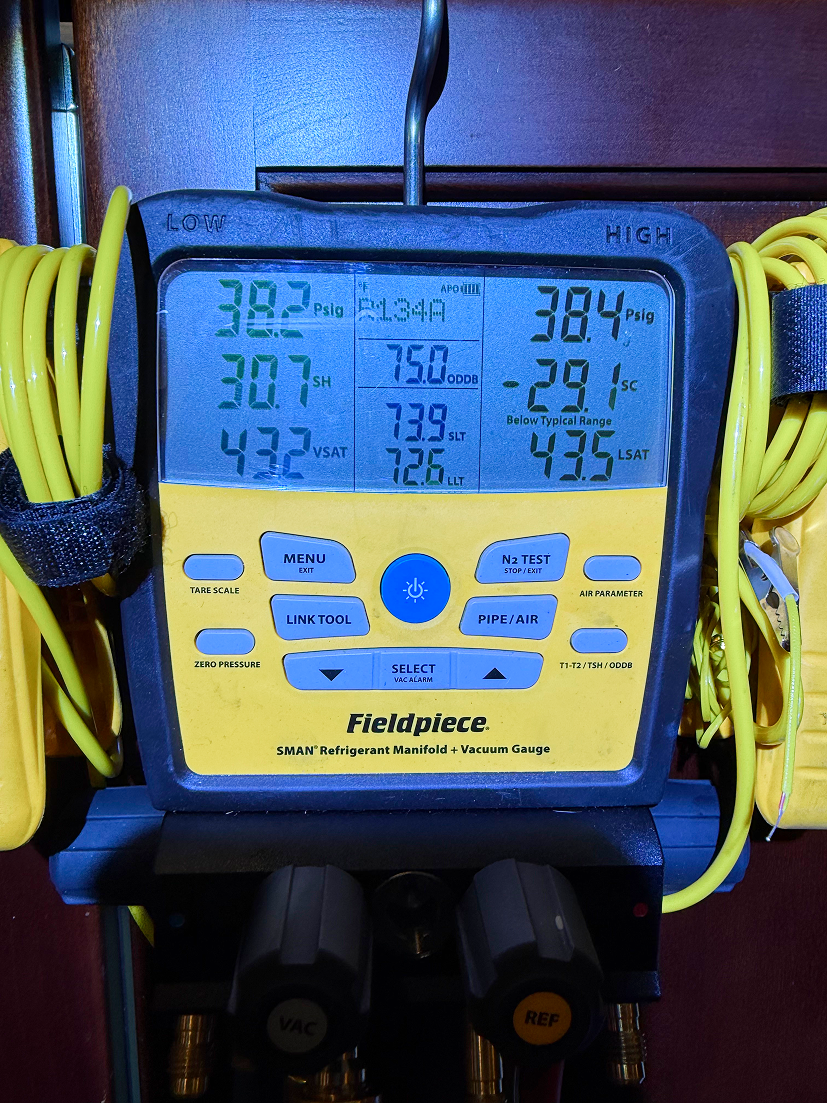
A Hillsborough Township homeowner contacted us after noticing that their refrigerator was not keeping food cold despite running constantly. When our technician connected the Fieldpiece SMAN manifold gage, the readings told the story right away: the high side pressure was critically low at 38.4 psig, with a "Below Typical Range" warning, indicating a refrigerant leak.
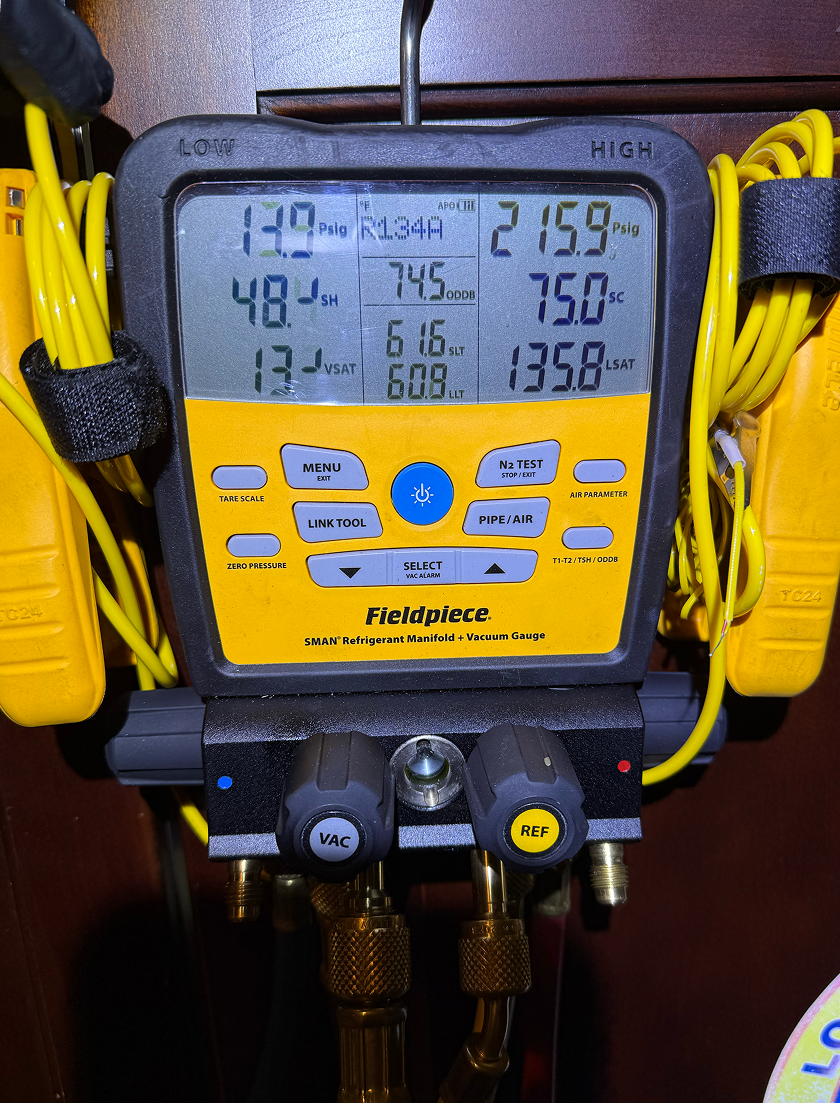
After locating and sealing the leak and recharging the system with R-134a, pressure returned to a healthy 215.9 psig on the high side, which is exactly where it should be. The refrigerator resumed proper cooling the same day.
Featured Articles
How Often Should You Clean Refrigerator Coils? (And What Happens If You Don't)
Learn More
Whirlpool Washer Not Filling With Water? Here’s What We Find
Learn More
How Long Do Home Appliances Last?
Learn More