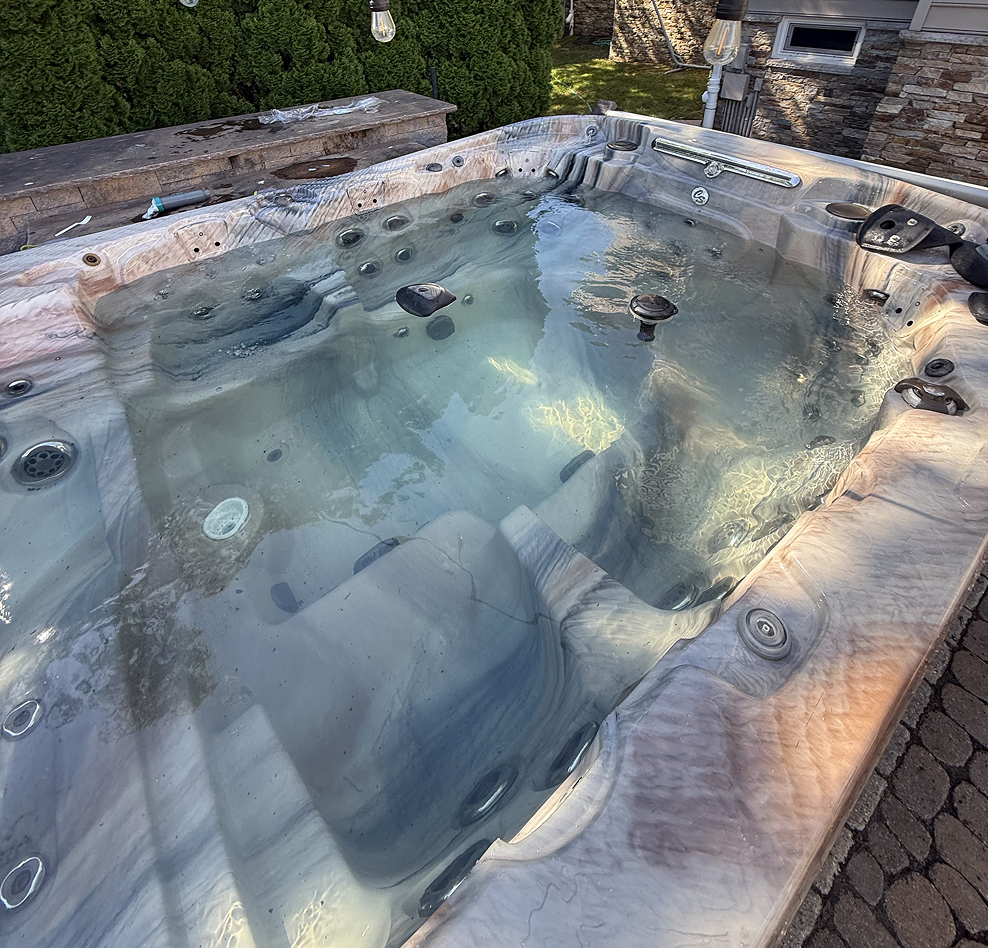
Hot Tub Not Heating? Start Here Before Calling Anyone
The problem is most often a dirty filter restricting water flow, a tripped GFCI breaker, an air lock in the plumbing after a refill or the tub is set to economy or sleep mode. A failed heating element is far less common than most people think; about 70% of the no-heat calls we get are fixed without replacing any parts at all.
We service hot tubs across Bridgewater, Hillsborough Township, Somerville, Raritan, and Branchburg. Here’s how to troubleshoot the problem before calling us, and how to know when you actually need a technician.
Hot Tub No Heat Troubleshooting
Step 1: Check the Basics
Before touching anything mechanical, check these first:
- Set temperature vs actual temperature — look at the control panel. If the set temperature is lower than the current water temperature, the heater won’t activate. Raise the set point at least 4°F above the current water temperature and wait 15–20 minutes.
- Operating mode — if the tub is in Economy or Sleep mode, it only heats at certain times of day. Switch to Standard mode and give it time to heat.
- Water level — low water level prevents the heater from activating as a safety measure. Top up the tub if needed.
Step 2: Reset the GFCI Breaker
A tripped GFCI breaker cuts all power to the heater. Find your hot tub’s breaker panel — usually a separate outdoor disconnect box near the tub. Flip the breaker off, wait 30 seconds, and flip it back on. If it trips again immediately, there’s an underlying electrical issue and you need a technician.
Step 3: Press the High Limit Reset Button
Most hot tubs have a red high limit reset button on the heater assembly — a safety feature that shuts the heater off if the water gets too hot or if water flow drops dangerously low. Many homeowners don’t know this button exists.
Remove the side panel to access the control pack. Find the red button on the heater — it may be covered by a small rubber cap. Press it firmly until you feel a click. Restore power and check if the heater activates. If the high limit keeps tripping, the underlying cause — usually low flow from a clogged filter — needs to be addressed first.
Step 4: Clean or Replace the Filter
A dirty or clogged filter is the single most common cause of hot tub heating failure. The heater won’t run without adequate water flow — it’s a built-in safety feature to prevent the element from burning out dry. If your filter hasn’t been cleaned in more than a month, this is almost certainly contributing to the problem.
Remove the filter, rinse it thoroughly, and reinstall. If it’s been more than a year, replace it. Run the tub without the filter for a few minutes to test — if it heats normally without the filter, the filter was the cause.
Step 5: Check for an Air Lock
If the no-heat problem started after draining and refilling the tub, an air lock is the most likely cause. Air trapped in the plumbing prevents water from circulating through the heater even though the pump is running.
To clear an air lock: loosen the union fittings near the pump slightly until you hear air escaping, then retighten. Alternatively, turn the jets on and off repeatedly to force the air through. This is one of the most common post-refill issues we get called about — and one of the easiest to fix.
How Do I Reset My Hot Tub Heater?
There are two resets on most hot tubs:
- GFCI reset — at the breaker panel or on the GFCI outlet. Flip off, wait 30 seconds, flip on.
- High limit reset — the red button on the heater assembly inside the side panel. Press firmly until it clicks.
After either reset, give the tub 15–20 minutes to begin heating before assuming the reset didn’t work. If the GFCI keeps tripping or the high limit keeps activating, the root cause hasn’t been addressed.
How Do I Know If My Heating Element Is Bad?
It 's the heating element that heats the water. Signs it failed:
- The tub runs and jets work normally but water never gets hot — even after checking the filter, breaker, and reset button
- The breaker trips specifically when the heater tries to activate
- Visible corrosion or burn marks on the element when inspected
A technician can test the element with an ohmmeter and a reading of between 10 and 14 ohms indicates a good element. It’s failed and needs replacing if it’s reading open. We do this kind of repair all the time in Bridgewater and in Hillsborough Township.
Do not fit the element until you have tested it. We’ve seen many instances where the homeowner replaced the element and the tub still wouldn’t heat because the real problem was a clogged filter, a flow sensor or a tripped high limit that was ignored.
What Is the Most Common Problem With a Hot Tub?
Across our service calls in Somerset County, the most common hot tub issues in order are:
- Heating failure — almost always caused by a dirty filter, tripped breaker, or air lock rather than a failed element
- FLO error code — indicates low water flow, almost always from a dirty filter or closed valve
- Jet problems — weak jets or jets that won’t turn on, usually a pump or airlock issue
- Leaks — from fittings, jets, or the pump seal
- Control panel errors — sensor failures, OH (overheat) codes, or display issues
The FLO error code is particularly common in Hillsborough Township and Branchburg homes with hot tubs that run year-round — NJ winters cause filter debris to build up faster and water chemistry fluctuations that affect flow sensors.
Is It Worth Repairing a Hot Tub?
In most cases, yes, especially on quality brands under 15 years old. A hot tub that’s well maintained and structurally sound is worth repairing for most component failures. Heater elements, pumps, control boards, and jets are all replaceable parts.
The math changes if the shell is seriously cracked, the insulation is badly deteriorated, several major components are failing simultaneously or the tub is an obsolete brand for which parts are no longer available.
Our honest answer to repair vs replace: If the repair cost is less than 30-40% of a comparable new hot tub and the tub is otherwise in good condition, repair almost always makes sense. If it’s not, we’ll let you know.
How Many Years Should a Hot Tub Last?
A quality hot tub lasts 15 to 20 years with proper maintenance. Budget-tier tubs typically last 5 to 10 years. The biggest factors that extend or shorten that lifespan are water chemistry management, filter cleaning frequency, and cover condition — a damaged cover lets heat escape and accelerates every component’s wear.
In New Jersey, outdoor hot tubs face additional stress from freeze-thaw cycles in winter. Tubs that aren’t properly winterized or that run year-round without maintenance attention tend to fail earlier than the expected lifespan.
Recent Repair: Hot Tub Not Heating in Raritan, NJ

A homeowner in Raritan called us about a hot tub that had stopped heating completely. They’d already tried turning it off and on and assumed the heater element had failed. They were ready to buy a new tub.
Our technician found the filter heavily clogged — it hadn’t been cleaned in several months — and the high limit reset had tripped because of the resulting low water flow. We cleaned the filter, pressed the reset, and the tub was heating normally within 20 minutes.
When Should I Call a Professional?
Try yourself first: check the mode settings, clean the filter, reset the GFCI and high limit, and clear any air lock after a refill.
Call us if the breaker keeps tripping after a reset, the high limit keeps activating after cleaning the filter, the tub runs but never heats after all basic checks, you see error codes that don’t clear, or you suspect an electrical or leak issue.
We service hot tubs across Bridgewater, Hillsborough Township, Somerville, Raritan, and Branchburg. Most hot tub heating calls are diagnosed and resolved on the first visit.
Featured Articles
Refrigerant Leak in Your Refrigerator: Signs, Causes, and What to Do
Learn More
How Often Should You Clean Refrigerator Coils? (And What Happens If You Don't)
Learn More
Whirlpool Washer Not Filling With Water? Here’s What We Find
Learn More
.svg)
%201.svg)