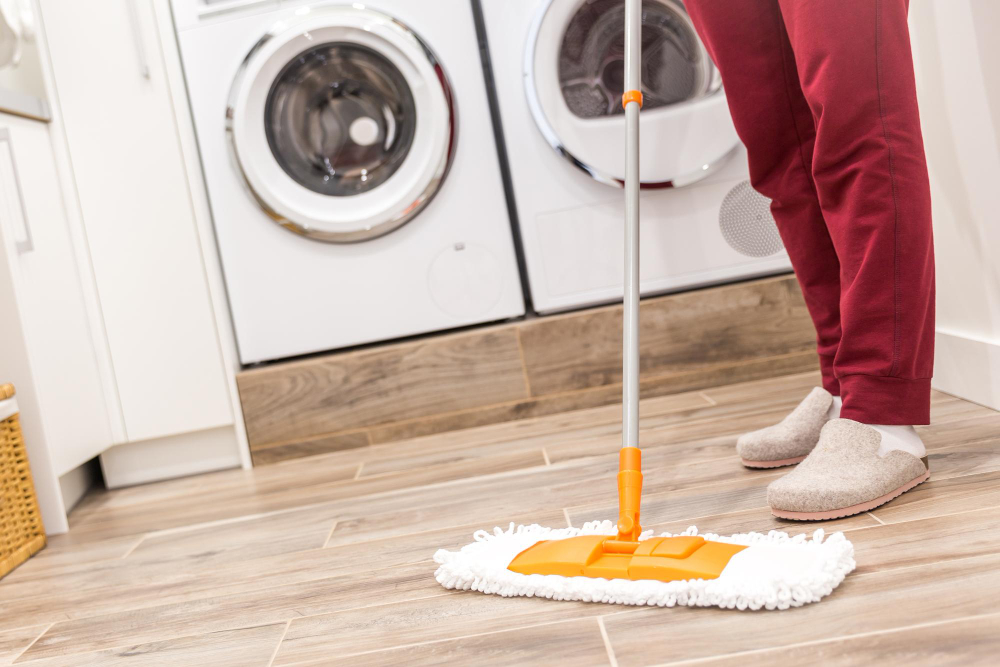
The Washer Is Leaking; What Could It Be?
If your washer is leaking, the most likely causes are a cracked or loose inlet hose, a worn door gasket, a failed tub seal, a cracked drain pump housing, or an overloaded drum during the spin cycle. The location of the water — front, back, bottom, or only during certain parts of the cycle — tells you almost exactly what's wrong before you even open up the machine.
A leak needs to be dealt with quickly. Even a small, slow drip can damage your floors, subfloor, and walls over time — and in older Bridgewater and Raritan homes with finished basements, a laundry room leak can turn into a much bigger problem than the washer itself. We get calls regularly from homeowners who noticed a wet floor, ran the washer again to "check," and only realized afterward that everything looked fine on the inside even though water kept appearing outside the machine.
Where Is the Water Actually Coming From?
The first thing we do on every leaking washer call is find the exact source. Water on the floor doesn't tell you much on its own — it could be coming from the front, the back, the bottom, or even the detergent drawer, and each of these points to a completely different repair.
Why Is My Washer Leaking from Behind?
The two hoses at the back of your washer — hot and cold — connect to the wall supply valves and carry water into the machine. These hoses are under constant pressure every time the washer fills. Over time the rubber degrades, the connections loosen, or the rubber washers inside the couplings crack and fail. A leak here shows up as water on the floor behind the machine, often first noticed as a damp wall or baseboard rather than an obvious puddle.
The water inlet valve itself — the component the hoses connect to on the machine — can also fail from sediment buildup or general wear, allowing water to seep through even when the washer isn't running.
Fix: Check both hoses and connections. Tighten the couplings by hand. If the hoses are cracked, bulging, or more than 5 years old, replace them. This is a $15–30 DIY fix and one of the best preventive maintenance steps you can do. We recommend replacing washer hoses every 5 years regardless of visible condition. If the inlet valve itself is leaking, that's a professional repair.
Why Is My Front-Load Washer Leaking from the Door?
The rubber gasket that seals the door on a front loader is the single most common source of leaks we find on front-load machines. The gasket wears, tears, or cracks over time — especially if the machine is overloaded regularly or if mold and detergent buildup has degraded the rubber. A damaged gasket lets water spray out during the wash and spin cycles, pooling at the base of the machine and sometimes running out under the door.
Fix: Inspect the gasket folds carefully for tears, especially in the lower section where water collects. Small tears can sometimes be sealed; larger tears require gasket replacement — typically $80–150 including labor.
Why Is My Washer Leaking from the Bottom?
This is one of the most confusing leaks for homeowners, because everything about the wash cycle can look completely normal — the machine fills, agitates, drains, and spins as expected, but water still appears underneath. A leak pooling directly under the machine with no clear source from the front or back usually points to one of three things: the tub seal, the drain pump, or a cracked outer tub.
The tub seal sits between the inner and outer tub and wears out gradually over years of use, allowing water to seep through during the wash cycle specifically — you may notice the leak only happens while the drum is filling or agitating, not during spin. A cracked drain pump housing causes a similar bottom-leak pattern, but typically right after the drain cycle runs rather than during fill. A cracked outer tub is less common but does happen on older machines, and produces a leak regardless of which part of the cycle is running.
Fix: All three require accessing the inside of the machine and are best handled by a professional — the tub seal in particular requires partial disassembly on most models, and a cracked tub may not be cost-effective to repair depending on the age of the washer.
Why Does My Washer Only Leak During the Spin Cycle?
If the leak only happens during spin and not during fill or wash, the most common cause is an unbalanced or overloaded load shifting inside the drum and forcing water past the door seal or out through gaps it shouldn't reach. Try a smaller, evenly distributed load and see if the leak still happens. If it does even with a balanced load, the door gasket or door latch is likely the issue rather than the load itself.
Why Is the Leak Coming From the Detergent Drawer?
If water is dripping from the front of the machine near the detergent dispenser rather than pooling at the base, the dispenser drawer or its internal water line may be clogged or cracked. Detergent residue buildup is the most common cause — it blocks the normal flow path and forces water to back up and overflow out the front instead.
Fix: Remove the dispenser drawer and clean it thoroughly, including the housing it sits in. If the leak continues after a thorough cleaning, the water inlet valve feeding the dispenser may need inspection.
Real Case: Maytag Top-Load Washer in Hillsborough Township, NJ
A homeowner in Hillsborough Township called us after finding water on the laundry room floor for the third time in two weeks. Each time, they'd run a load, see no obvious problem during the cycle, and then discover a puddle afterward — frustrating because nothing seemed visibly wrong with the machine.
Our technician traced the leak to the tub seal, which had started failing gradually — explaining why it wasn't leaking every single load and why nothing looked wrong from the outside. We replaced the seal, which required partially disassembling the top-load unit, and confirmed no leak across three full test cycles including different load sizes.
When Should I Call a Professional Instead of DIYing?
You can handle yourself: tightening or replacing inlet hoses, cleaning the detergent dispenser, checking and cleaning the door gasket, running smaller balanced loads to rule out an overload issue.
Call us if: the leak is coming from the bottom of the machine, it happens only intermittently, the door gasket is torn rather than just dirty, or you've checked the obvious sources and the leak continues. A leak with no obvious external cause almost always means something internal — tub seal, drain pump, or inlet valve — that needs a technician to access safely.
We repair all washer brands — Whirlpool, Maytag, LG, Samsung, GE, Bosch, Kenmore, and more. Front loaders and top loaders. For most washer leak calls in the Bridgewater area, we diagnose and fix in a single visit.
Frequently Asked Questions — Washer Leaking Water
How much does it cost to fix a leaking washer in NJ?
Most washer leak repairs in the Bridgewater area run between $80 and $220 for parts and labor combined. A hose replacement is on the lower end. A door gasket, tub seal, or drain pump repair runs higher depending on the model and how much disassembly is required.
Is it safe to keep using a washer that's leaking?
A small leak won't immediately damage the machine, but continued use risks water damage to your floors and subfloor, and can encourage mold growth if water is reaching the gasket area or sitting under the unit. We recommend addressing it as soon as you notice consistent water on the floor, even if the amount seems small.
Why does my washer leak only sometimes, not every load?
Intermittent leaks usually point to a gradually failing part — a tub seal or gasket that's wearing out but hasn't fully failed yet, or a load-balance issue that only causes leaking when laundry shifts a certain way. These leaks tend to get more frequent over time rather than going away on their own.
Why is there water under my washer but everything looks fine during the cycle?
This is one of the most common patterns we see, and it almost always points to an internal source — tub seal, drain pump housing, or inlet valve — rather than anything visible from the outside. The cycle itself runs normally because the leak is happening separately from the wash, fill, or drain functions actually working correctly.
Can an overloaded washer cause leaking?
Yes. An overloaded or unevenly distributed load can shift during the spin cycle and force water past the door seal or beyond areas it would normally stay contained in. This is one of the easiest causes to rule out — simply try a smaller, balanced load and see if the leak stops.
Should I unplug my washer if it's leaking?
If the leak is significant or you're unsure of the source, it's reasonable to stop using the washer and unplug it until it's been inspected, particularly if water is reaching electrical components at the back of the machine. For a minor leak from an obvious source like a loose hose, it's generally fine to address the fix yourself first.
Book a same-day washer repair
A leaking washer is worth fixing quickly before it damages your floors or turns into a bigger repair. We provide professional washer repair services, usually the same day.
Featured Articles
Why Your Coffee Machine Stopped Working—And How We Fixed It.
Learn More
Treadmill Not Turning On? Here’s What We Usually Find
Learn More
Hot Tub Not Heating? Troubleshooting Guide for Somerset County Homeowners
Learn More
.svg)
%201.svg)