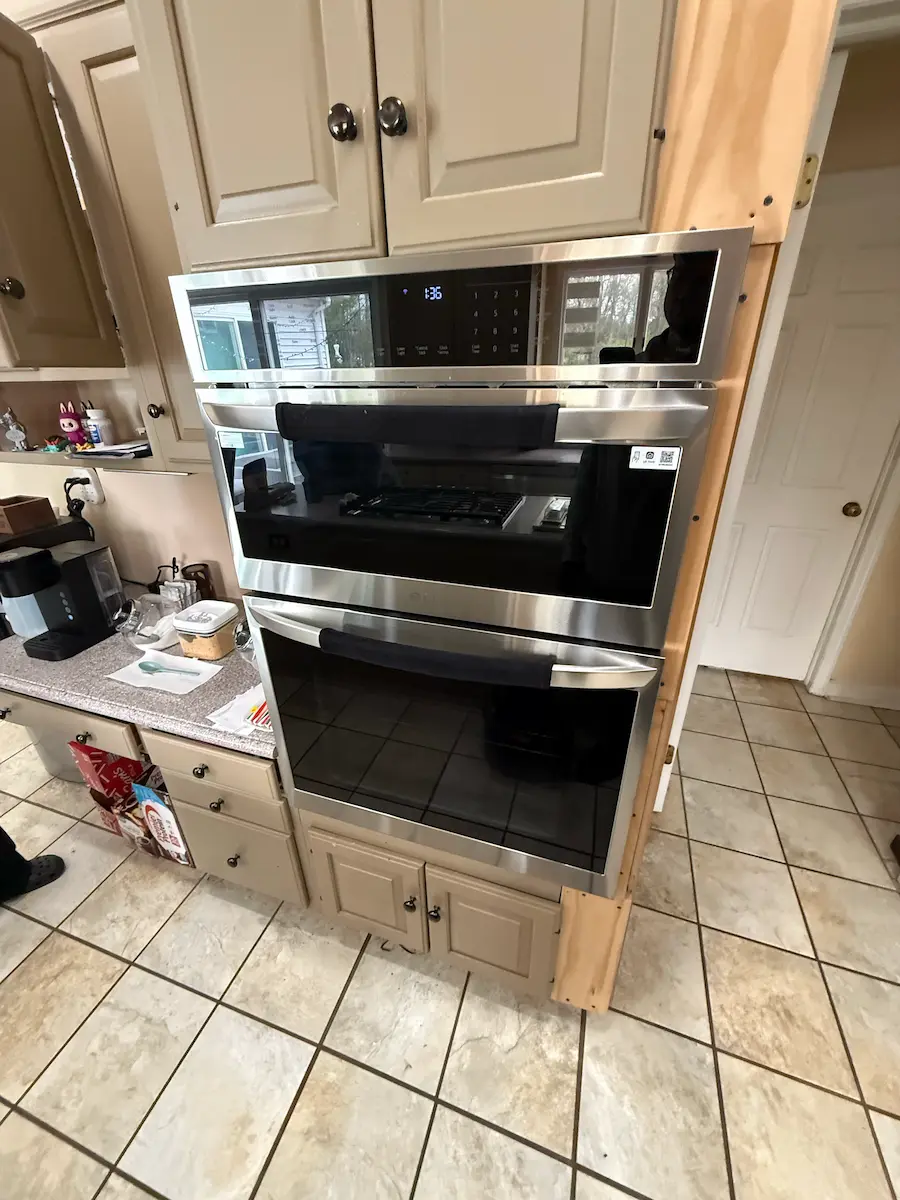
Why Is My Oven Not Heating Up?
An oven that won't heat is almost always caused by one of five things:
- Failed bake or broil element (electric)
- Faulty igniter (gas)
- Blown thermal fuse
- Failed temperature sensor
- Damaged control board
The display may still work perfectly and the oven may appear completely normal — but nothing heats. Here's how to figure out which one it is.
An Oven That Won't Heat: Start Here
Before assuming a major failure, check two things first.
Reset the power.
Unplug the oven or flip the circuit breaker off for five minutes, then restore power. A control board that's confused after a power surge or a self-clean cycle can sometimes be cleared with a hard reset. Takes two minutes and costs nothing.
Check the clock and timer settings.
Many ovens — especially Whirlpool, GE, and Samsung models — won't allow baking if the clock isn't set or if an automatic cook timer is active. If your display shows dashes or a timer you didn't set, that may be locking you out of the bake function entirely.
If neither of these resolves it, you're dealing with a component failure.
Why Won't My Electric Oven Heat Up?
Failed Bake Element
The bake element at the bottom of the oven cavity generates the heat for most cooking functions. When it fails, the oven preheats but never gets warm, or heats very unevenly. The clearest sign: look inside while the oven is set to bake. A working element glows bright red-orange within a few minutes. An element that shows no glow, glows only partially, or has a visible crack or blister has failed.
Replacement elements for Whirlpool, GE, LG, Samsung, and Frigidaire are widely available and this is one of the more straightforward oven repairs. We carry common elements in the van for the brands we see most often in Hillsborough Township, Bridgewater, and Branchburg.
Blown Thermal Fuse
The thermal fuse is a one-time safety device that cuts all power to the heating elements if the oven exceeds a safe temperature. Once it blows, the oven display may still function normally — clocks, timers, lights all work — but nothing heats. This is a key diagnostic detail: display on, no heat = likely thermal fuse.
The most common cause of a blown thermal fuse in an oven is the self-clean cycle. The self-clean cycle runs the oven at 800–900°F for several hours — far beyond normal cooking temperatures — and this regularly causes thermal fuses to blow. We see this constantly across Hillsborough Township and Bridgewater. Homeowners run the self-clean on a Tuesday, try to bake on Wednesday, and the oven is dead.
Failed Temperature Sensor
The temperature sensor monitors the oven interior and tells the control board when to cycle the heating element on and off. A failing sensor causes the oven to underheat, overheat, or not heat at all depending on how it fails. You can often spot a failed sensor visually — it's a thin probe inside the oven cavity near the back wall. If it's visibly damaged, touching the oven wall, or coated in residue it may be misfiring.
Control Board Failure
The control board is the brain of the oven — it manages every function including sending power to the elements. When it fails, the symptoms can be unpredictable: oven heats intermittently, one element works but not another, or nothing heats despite the display appearing normal. Control board failures are more common after self-clean cycles, power surges, and on ovens that are 8–12 years old.
Why Won't My Gas Oven Heat Up?
Gas oven failures are different from electric — the problem is almost always the igniter or the gas valve, not a heating element.
Weak or Failed Igniter
The igniter on a gas oven does two jobs: it glows to ignite the gas, and it draws enough current to open the gas valve so gas can flow. When the igniter weakens over time, it may glow but not draw enough current to open the valve — meaning you see the igniter glowing orange but no flame appears and the gas never ignites.
Signs of a failing igniter: it takes much longer than usual to light, the oven heats but takes 20+ minutes to preheat, or it glows orange but never produces a flame. A healthy igniter should bring the oven to temperature in 10–15 minutes. We replace gas oven igniters regularly across the Bridgewater area — it's one of the most common gas oven repairs we do.
Gas Valve Failure
If the igniter is confirmed good and still no flame appears, the gas valve itself may have failed. The valve controls gas flow to the burner and can fail mechanically or electronically. This requires professional diagnosis and replacement.
Clogged Burner or Igniter Port
On gas ranges specifically, grease and food debris can clog the burner ports around the oven burner, restricting gas flow enough that the flame is too weak to maintain temperature. A thorough cleaning of the burner assembly sometimes resolves what looks like a heating failure.
The Self-Clean Problem: A Warning We Give Every Customer
This comes up so often that it deserves its own section. The self-clean cycle is the single most common cause of oven failure we see in the field.
The cycle heats the oven to 800–900°F for several hours to burn off residue. This extreme temperature — far beyond anything the oven reaches during normal use — puts enormous stress on every component: the thermal fuse, the heating elements, the door latch mechanism, the wiring, and the control board.
Our honest advice: run the self-clean no more than once or twice a year, and never run it right before a major cooking event. We've had multiple calls over the years from homeowners in Bridgewater, Somerville, and Hillsborough Township who ran the self-clean the day before Thanksgiving and woke up to a dead oven. Don't put yourself in that position.
If your oven stopped working immediately after a self-clean cycle, the thermal fuse is the first thing to check. If the fuse is fine, the control board or wiring may have been damaged by the heat.
Recent Repair: Whirlpool Oven in Hillsborough Township, NJ
A homeowner in Hillsborough Township called us last week about a Whirlpool oven that had completely stopped heating. The display was working perfectly — clock, timer, preheat indicator all functioning normally — but after 30 minutes at 375°F the oven was stone cold.
They'd run the self-clean cycle three days earlier. Classic pattern.
Our technician tested the thermal fuse and confirmed it had blown during the self-clean. We replaced the fuse, ran a full bake cycle to confirm the element was heating properly, and checked the control board and wiring for any secondary heat damage. Everything else checked out fine.
Total repair time: under 45 minutes. The homeowner had been considering buying a new oven — the Whirlpool was only six years old and otherwise in perfect condition. A $25 part and one service visit was all it needed.
Troubleshooting Steps from ProFix Team
Before calling us, work through these in order:
- Reset the power — breaker off for five minutes, then restore
- Check clock and timer settings — make sure no timer is blocking the bake function
- Look at the bake element — set oven to bake and watch for a red-orange glow within a few minutes
- Note whether the display works — display on with no heat strongly suggests a thermal fuse
- Gas oven: watch the igniter — does it glow? Does a flame appear within 30–60 seconds?
Call us if: the element doesn't glow, the display works but nothing heats, you've reset the power and the problem continues, or the oven stopped working right after a self-clean cycle.
When Is It Worth Repairing vs. Replacing?
Most oven repairs — bake element, thermal fuse, igniter, temperature sensor — run $80–200 for parts and labor and are absolutely worth doing on an oven under 10 years old. A control board replacement runs higher but is still often worth it depending on the oven's age and the cost of replacement.
As a general rule: if the repair costs less than 50% of a comparable new oven and the unit is under 10 years old, repair almost always makes financial sense. We'll give you an honest assessment either way — if it's not worth fixing, we'll tell you that too.
Frequently Asked Questions — Oven Not Heating
Why does my oven display work but not heat?
This is almost always a blown thermal fuse. The fuse cuts power to the heating elements while leaving the display and control board powered. It's a one-time safety device that needs replacing once blown. Very common after self-clean cycles.
Why did my oven stop working after self-cleaning?
The self-clean cycle runs at 800–900°F for several hours — far beyond normal cooking temperatures. This extreme heat commonly blows the thermal fuse, damages the control board, or damages wiring. The thermal fuse is the most likely cause and the first thing to check.
How do I know if my oven bake element is bad?
Set the oven to bake and look through the window within the first few minutes. A working element glows bright red-orange. No glow, partial glow, or a visible crack or blister means the element has failed.
Why is my gas oven not heating properly?
Almost always the igniter. A weakening igniter may glow but not draw enough current to open the gas valve, so no flame appears. If the oven takes much longer than usual to preheat or cycles weakly, the igniter is the first suspect.
How much does oven repair cost in NJ?
Most oven repairs in the Bridgewater area run $80–200 for parts and labor combined. A thermal fuse or bake element is on the lower end. A gas igniter replacement runs in the middle range. A control board replacement runs higher. We always quote before starting any work.
Should I repair my oven or buy a new one?
If the repair is under 50% of a comparable new oven and the unit is under 10 years old, repair almost always makes sense. Common repairs like a bake element, thermal fuse, or igniter are well worth doing. We'll always give you an honest recommendation.
Featured Articles
Refrigerant Leak in Your Refrigerator: Signs, Causes, and What to Do
Learn More
How Often Should You Clean Refrigerator Coils? (And What Happens If You Don't)
Learn More
Whirlpool Washer Not Filling With Water? Here’s What We Find
Learn More
.svg)
%201.svg)